Ready for a free quote?
Call Now
Heat Cable Installation
Roofing

Heat Cable Installation in Toronto & the GTA

Professional heat cable installation in Toronto & GTA. Prevent ice dams, protect your roof and gutters through harsh Ontario winters.

1,500+
Installations
100%
Ice Dams Prevented
Self-Reg
Energy Efficient
WSIB Insured
29+ Years Experience
Heights Certified
30,000+ Clients
4.9 Google Rating

About Our Heat Cable Installation Service

Ice dams form when heat escaping from your attic melts snow on your roof, which then refreezes at the cold eaves. The resulting ice barrier traps water, which backs up under shingles and into your home. Heat cables prevent this cycle.

We install self-regulating heat cables that adjust their output based on temperature, using more energy when it's cold, less when it's warm. This is safer and more efficient than constant-wattage systems.

Heat cables are most effective when combined with proper attic insulation and ventilation. We'll assess your situation and recommend a complete solution.

Root Cause vs. Symptom

Heat cables treat the symptom (ice at the eaves), but the root cause is usually heat loss from your attic. For the best long-term solution, consider improving attic insulation and ventilation alongside heat cable installation.

Request a Free Quote

Why This Matters for Your Home

Understanding the importance of proper maintenance and quality workmanship.

Prevent Ice Dams

Heat cables melt channels through ice, allowing water to drain before it backs up under shingles.

Protect Gutters

Ice expansion can destroy eavestroughs. Heat cables keep them clear.

Avoid Interior Damage

Ice dam leaks cause ceiling damage, mold, and electrical hazards.

Safety

Prevent dangerous icicle formation over walkways and entries.

Our Process

What to expect when you work with Tip Top Trough.

1

Assessment

We identify problem areas and determine cable routing for maximum effectiveness.

Assessment
2

Cable Installation

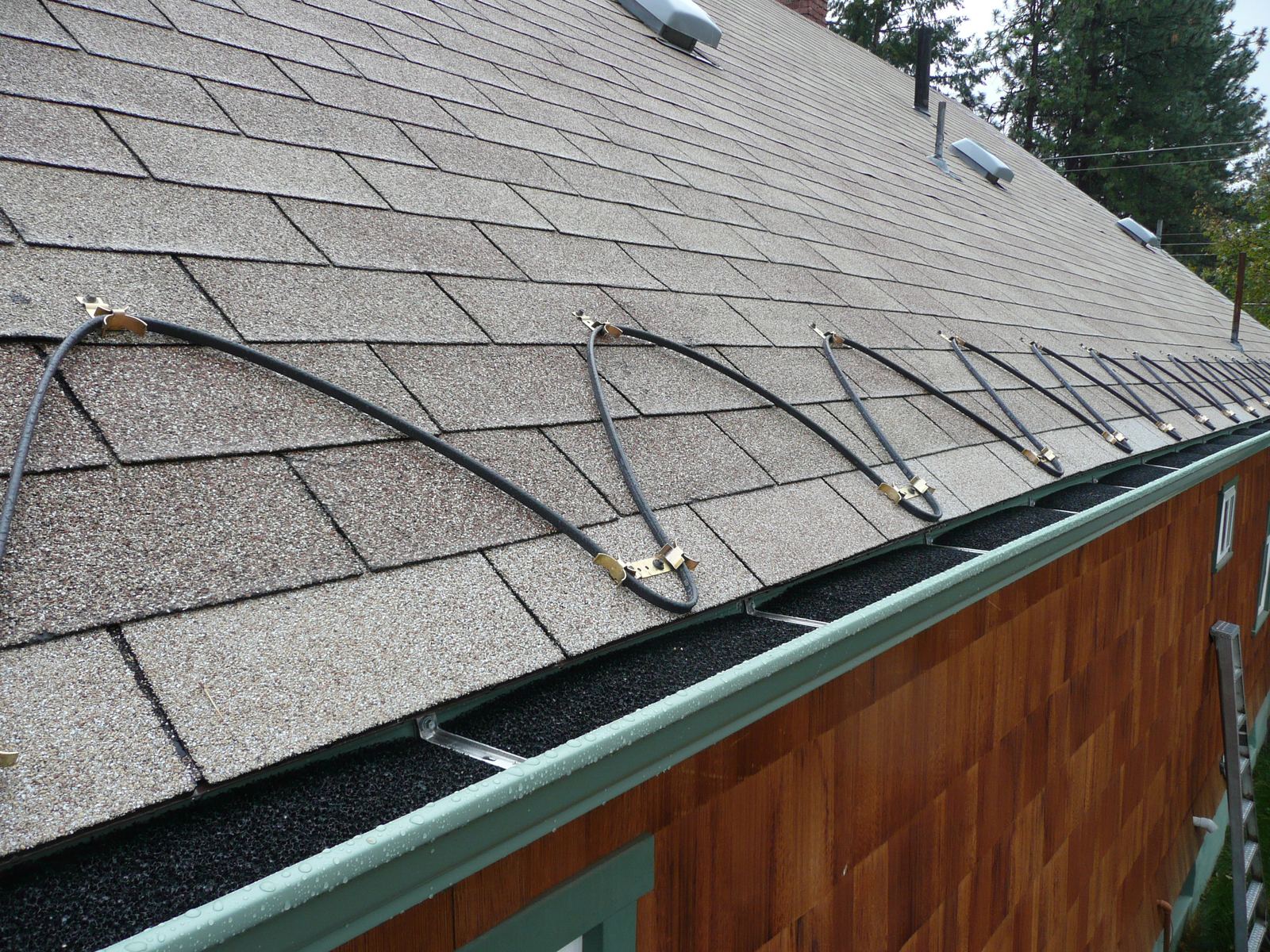
Self-regulating cables are installed along eaves and through downspouts in a zigzag pattern.

3

Electrical Connection

Cables are connected to a weatherproof outlet, usually controlled by a thermostat or switch.

4

System Test

We verify proper operation before leaving.

5

Usage Instructions

We explain when and how to use the system for optimal protection and energy efficiency.

The Complete Guide to Heat Cables for Ontario Homes

Everything GTA homeowners should know about roof and eavestrough heat cables: how they work, where they go, what they cost to run, and how to get years of reliable winter protection.

How Ice Dams Form on GTA Roofs

Southern Ontario winters are unusually hard on roofs because temperatures swing above and below freezing so often. A sunny afternoon at 2°C followed by a night at −12°C is the perfect recipe for ice dams. Warm air leaking from the living space into the attic heats the underside of the roof deck, snow on the upper roof melts, and that meltwater runs down to the overhang. The overhang sits outside the heated envelope of the house, so it is much colder, and the water refreezes there.

Night after night, that refrozen water builds into a ridge of ice along the eaves and inside the eavestrough. Once the ridge is tall enough, new meltwater has nowhere to go. It pools behind the ice and works its way up and under the shingles, which are designed to shed water downhill, not hold back standing water. The result is a leak that shows up as stained ceilings, wet insulation, peeling paint around windows, or water running down interior walls, often in the middle of February when roof repairs are hardest to do.

Homes in Toronto, North York, Etobicoke and older parts of the inner suburbs are especially prone because many were built with modest attic insulation, shallow roof pitches, and limited soffit ventilation. Bungalows and 1.5-storey homes with finished upper floors and knee walls are some of the most common ice dam homes we see across the GTA.

How an ice dam forms
Warm air escapes into atticSnow melts, water runs downIce damBacked-up water leaks insideWarm living space
Heat escaping into the attic warms the roof deck and melts the snow above it. The melt water runs down to the cold overhang, refreezes into a ridge of ice, and the water trapped behind it can back up under the shingles and into the home.

What Heat Cables Actually Do

A heat cable (also called heat tape, de-icing cable, or roof and gutter cable) is an electrical cable that gently warms the areas where ice dams start: the roof edge, the inside of the eavestrough, and the downpipe. It does not melt all the snow on your roof, and it is not supposed to. Its job is to keep a continuous drainage path open so meltwater can escape off the roof, through the gutter and down the downpipe before it has a chance to refreeze and back up.

Think of it as keeping the drain open rather than clearing the whole sink. As long as water has a warm channel to follow all the way to the ground, the ice ridge can't trap it against your shingles. That is why a properly routed system covers several zones, not just one. A cable laid only in the gutter, for example, can leave the downpipe frozen solid, and a frozen downpipe turns the entire eavestrough into an ice block.

  • Roof edge: a zig-zag pattern along the first few feet of shingles above the overhang, where ice dams begin.
  • Eavestrough: a run along the bottom of the trough so melt can flow toward the outlet.
  • Downpipe: cable dropped down the full length of the downpipe so the exit point never freezes shut.
  • Valleys and problem spots: extra coverage where two roof planes meet or where snow slides and piles up.
Where heat cable goes
Snow loadZig-zag along the eaveRun inside the eavestroughDown the downpipe
Cable runs in a zig-zag along the roof edge, through the eavestrough and down the downpipe, keeping a continuous melt path open so water can drain instead of refreezing.

Self-Regulating vs. Constant-Wattage Cable

There are two main types of heat cable on the market. Constant-wattage cable (the inexpensive kind sold in pre-packaged kits at big-box stores) puts out the same amount of heat whether it is −20°C or +5°C. It must never cross over or touch itself, it can overheat if covered by leaves or debris, and it uses the same energy the entire time it is plugged in.

Self-regulating cable, which is what we install, has a special conductive core that automatically increases its heat output as the temperature drops and reduces it as things warm up. Each section of the cable responds to its own surroundings, so a length sitting in a sunny section of gutter draws less power than a length buried in a shaded, ice-packed downpipe. It is safer, more forgiving to install, more energy efficient, and generally lasts far longer than budget constant-wattage kits.

The upfront cost of self-regulating cable is higher, but for most homeowners it is the better value over the life of the system, especially once you factor in lower running costs and fewer replacements.

Cable output as temperatures drop
Outdoor temperature →MildVery coldHeat outputConstant-wattage: always full outputSelf-regulating: adjusts itself
Illustrative only: constant-wattage cable produces the same heat whenever it is on, while self-regulating cable automatically increases its output as it gets colder and throttles back on milder days.

What Does a Heat Cable Cost to Run?

Running cost depends on how much cable you have, the cable's rated output, how cold it is, and how many hours you leave it on. As a rough illustration: if a home has about 100 feet of cable drawing an average of 5 watts per foot, the system uses about 0.5 kWh per hour of operation. At typical Ontario residential electricity rates of roughly 10–15 cents per kWh (before delivery charges), that works out to somewhere around 5–8 cents per hour while it is actually heating. These are estimates. Your actual cable, rate plan and usage will change the numbers.

Because self-regulating cable automatically throttles back on milder days, real-world costs are usually lower than a constant-wattage system of the same length. The biggest savings come from smart operation: running the system during and after snowfalls and during freeze-thaw stretches, rather than leaving it on around the clock from November to April. Many homeowners add a switched outlet or a temperature/moisture controller so the cable only runs when ice can actually form.

Electrical Requirements and Safety

Heat cables should always be plugged into a weatherproof exterior outlet with ground-fault protection, and installed according to the manufacturer's instructions. Never use an indoor extension cord to power a roof cable, and never staple through a cable to hold it in place. We use purpose-made clips that attach without damaging shingles or the cable jacket.

If your home doesn't already have a suitable outdoor outlet close to the roof line, a new circuit or receptacle may be needed. In Ontario, new electrical work is regulated by the Electrical Safety Authority (ESA) and should be completed by a licensed electrical contractor. During our assessment we'll tell you whether your existing outlets will work or whether you'll need an electrician first, so there are no surprises on installation day.

When Is the Best Time to Install Heat Cables?

The best time is in the fall, ideally September through early December, before snow and ice arrive. Cables can be clipped neatly to dry shingles and clean eavestroughs, and you'll have protection ready the first time a freeze-thaw cycle hits. Booking early also means you avoid the winter rush, when ice dam calls spike after every major storm.

We strongly recommend pairing installation with a fall eavestrough cleaning. Heat cables can't do their job in a trough packed with wet leaves, and debris trapped against a cable all winter is never a good idea. If your home already has an active ice dam, we can safely remove it with low-pressure steam first and then install cables once the area is clear.

Book a fall eavestrough cleaning

Heat Cables Work Best as Part of a Complete Plan

Heat cables are excellent at managing the symptom (ice at the eaves), but the long-term fix for chronic ice dams is reducing the heat that reaches your roof deck in the first place. That usually means a combination of air-sealing the attic floor (around pot lights, bathroom fans, attic hatches and plumbing stacks), adding insulation, and making sure your soffit intake vents and roof exhaust vents are open and balanced.

For many GTA homes, the ideal approach is layered: improve ventilation and insulation where it's practical, keep eavestroughs and downpipes clean and properly sloped, and install heat cables on the sections of roof that still ice up because of their orientation, pitch or architecture. North-facing eaves, valleys, low-slope sections over porches, and areas below dormers are the most common trouble spots even on well-insulated homes.

Learn about vented soffit replacement

Maintaining Your Heat Cable System

A good heat cable system needs very little care, but a quick seasonal check goes a long way. Each fall, before you switch it on for the season, take a look from the ground for any cable that has come loose, sagged out of the trough, or been disturbed by squirrels, ladders or falling branches. Make sure the outlet cover closes properly and the ground-fault protection tests correctly.

  • Turn the system on before a forecast snowfall or deep freeze, not after ice has already built up.
  • Leave the cable in place year-round; removing and reinstalling it every season causes more wear than leaving it clipped.
  • Keep eavestroughs clean so leaves don't sit on the cable.
  • If a section stops melting, call a professional rather than adjusting cables from a ladder on an icy roof.
  • Never cover cable with insulation, roofing materials or debris.

Not sure what your home needs?

Book a free, no-pressure assessment. We'll tell you honestly what's worth doing and what isn't.

Get a Free Quote

Our Work

See examples of our craftsmanship across the GTA.

Heat Cable Installation project 1
Heat Cable Installation
Heat Cable Installation project 2
Heat Cable Installation
Heat Cable Installation project 3
Heat Cable Installation
Heat Cable Installation project 4
Heat Cable Installation
Heat Cable Installation project 5
Heat Cable Installation
"First winter in 10 years without ice dam leaks. Should have installed these years ago."
D

Daniel R.

Newmarket • Heat Cable Installation

Frequently Asked Questions

Common questions about heat cable installation services.

QHow do heat cables prevent ice dams?

Heat cables melt channels through ice, allowing water to drain before it backs up under shingles. They also keep gutters clear, preventing ice expansion from destroying eavestroughs.

QDo heat cables address the root cause of ice dams?

Heat cables treat the symptom (ice at the eaves), but the root cause is usually heat loss from your attic. For the best long-term solution, consider improving attic insulation and ventilation alongside heat cable installation.

QWhat type of heat cables do you install?

We install self-regulating heat cables that adjust their output based on temperature, using more energy when it's cold, less when it's warm. This is safer and more efficient than constant-wattage systems.

QAre heat cables a good investment?

For homes prone to ice dams, heat cables are an excellent investment. They prevent costly water damage to your home's interior, protect your gutters from ice damage, and eliminate dangerous icicle formation over walkways and entries.

QShould heat cables be left on all winter?

Not usually. The most efficient approach is to run them before and during snowfalls and through freeze-thaw periods, then switch off during long stretches of stable, dry cold. A temperature or moisture controller can automate this so the cable only runs when ice can actually form.

QHow much does it cost to run heat cable in Ontario?

As a rough estimate, 100 feet of cable averaging 5 watts per foot uses about 0.5 kWh per hour, or roughly 5–8 cents per hour at typical Ontario electricity rates before delivery charges. Self-regulating cable usually costs less than this on milder days because it reduces its own output automatically.

QCan heat cables damage my shingles?

Properly installed self-regulating cable will not damage asphalt shingles. We use purpose-made clips designed for roofing and never nail or staple through the cable or shingles. Cheap constant-wattage kits installed incorrectly are the usual culprits when people report problems.

QDo I need an electrician to install heat cables?

If you have a suitable weatherproof, ground-fault protected outdoor outlet near the roof line, the cable can plug straight in. If a new outlet or circuit is needed, that work falls under Ontario Electrical Safety Authority rules and should be done by a licensed electrical contractor. We'll tell you which situation applies during the assessment.

QHow long do heat cables last?

Quality self-regulating cable that is installed correctly and kept free of debris commonly lasts many winters, often a decade or more. Budget constant-wattage kits tend to fail much sooner.

Related Services

Other services you might be interested in.

Ready to Get Started?

Contact us today for a free, no-obligation quote. We'll assess your needs and provide honest recommendations.