Ready for a free quote?
Call Now
Rain Barrel Installation
Eavestroughs

Rain Barrel Installation in Toronto & the GTA

Professional rain barrel installation in Toronto & GTA. Harvest rainwater, reduce water bills, and help the environment. Proper diverter setup included.

500+
Barrels Installed
1,000+ gal
Water Saved/Year
100%
Eco-Friendly
WSIB Insured
29+ Years Experience
Heights Certified
30,000+ Clients
4.9 Google Rating

About Our Rain Barrel Installation Service

Rain barrels capture free water for your garden while reducing stormwater runoff. A single barrel can save over 1,000 gallons during the growing season, and that water is better for plants than treated municipal water.

Proper installation is key. DIY barrel setups often cause foundation problems when they overflow or aren't properly connected to downpipes. We install with proper diverters that automatically redirect water once the barrel is full.

Many GTA municipalities offer rain barrel rebates. We can help you navigate the paperwork and ensure your installation meets program requirements.

Overflow Protection

The most common DIY rain barrel mistake is inadequate overflow handling. When your barrel fills, water needs somewhere to go. We install overflow connections that direct excess water away from your foundation automatically.

Request a Free Quote

Rain barrel installation with downspout diverter
Coming Q2 2026

City of Toronto Rain Barrel Subsidy

Toronto is launching a new pilot program to help residents collect stormwater on private property. The City will subsidize up to 80% of the cost of rain barrels and downspout diverters, with free home delivery available.

Up to 2 barrels + 1 diverter per address

Spring 2026 – Dec 31, 2026 (or until funds run out)

Proof of Toronto residency required

Owner consent if you're a tenant

Get ready now: We handle professional installation and ensure your setup meets all program requirements. Request a free quote today to be prepared when the subsidy launches.

Why This Matters for Your Home

Understanding the importance of proper maintenance and quality workmanship.

Free Water

Capture hundreds of gallons of free water for gardens, lawns, and washing.

Better for Plants

Rainwater is naturally soft and chlorine-free, and plants prefer it.

Reduce Runoff

Less water entering storm sewers means less strain on municipal systems.

Municipal Rebates

Many GTA cities offer rebates for rain barrel installation.

Our Process

What to expect when you work with Tip Top Trough.

1

Site Assessment

We determine the best location based on downpipe position, sun exposure, and garden access.

2

Downpipe Modification

A diverter kit is installed to direct water into the barrel while allowing normal drainage when full.

Downpipe Modification
3

Barrel Setup

The barrel is positioned on a stable, level base for optimal water pressure.

4

Overflow Connection

Overflow is connected to direct excess water safely away from your foundation.

5

Demonstration

We show you how to use the spigot, winterize the system, and maintain it.

Rain Barrels in the GTA: Setup, Benefits & Seasonal Care

How rain barrels work, how to size and place one, what to know about overflow and winterizing, and how they fit into a smart stormwater plan for your home.

How a Rain Barrel System Works

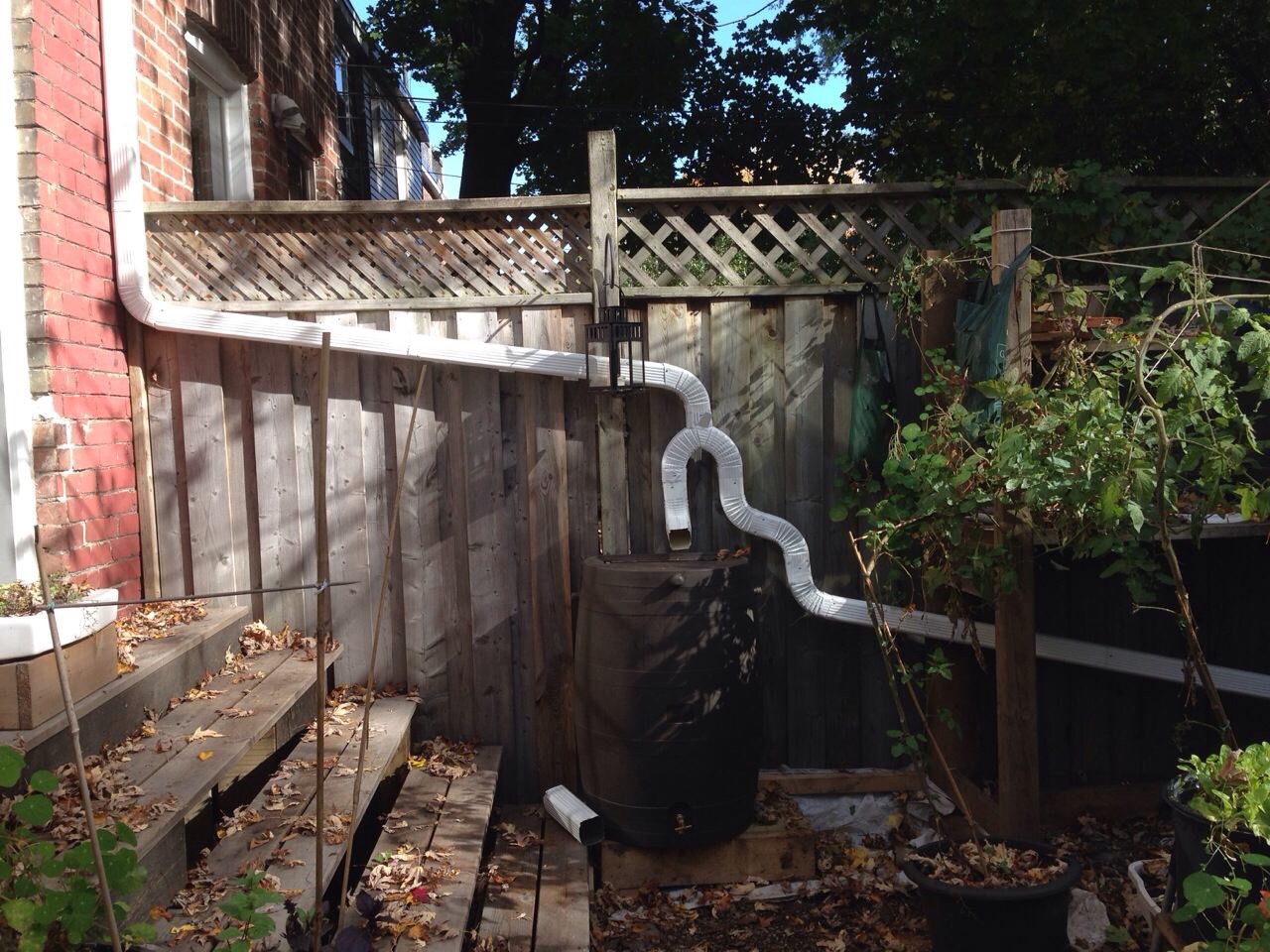
A rain barrel connects to one of your downpipes and captures the water running off your roof. A diverter or cut-in on the downpipe sends water into the barrel until it's full, then lets the excess continue down the pipe or out through an overflow hose. A spigot near the bottom of the barrel lets you fill a watering can or connect a garden hose.

Because the water comes straight from the roof, it's free of the chlorine found in treated municipal water, which many gardeners prefer for plants, vegetable beds and lawns.

How a rain barrel system works

DiverterSpigot for wateringOverflow away from house~55 gal
A diverter on the downpipe fills the barrel until it's full, then sends the excess on down the pipe or through an overflow hose aimed away from the foundation. A spigot at the bottom feeds a watering can or hose.

Benefits Beyond Free Water

Watering the garden for free is the obvious benefit, but rain barrels also help your home and your neighbourhood. Every litre captured is a litre that isn't pouring onto the ground next to your foundation or rushing into overloaded storm sewers during a heavy rain.

  • Free, chlorine-free water for gardens, lawns and planters
  • Lower outdoor water use during the summer
  • Less stormwater runoff and erosion around your property
  • Reduced load on municipal sewers during storms
  • A useful backup water supply for outdoor tasks

Choosing the Right Size and Location

Standard rain barrels hold around 50 to 60 gallons. During a moderate rain, a typical roof section can fill a barrel surprisingly quickly, so if you have a large garden you may want to connect two or more barrels in series to increase storage.

Placement matters. The barrel should sit near the garden you plan to water, on a downpipe that drains a good portion of the roof. It needs a solid, level base (a full 55-gallon barrel weighs several hundred pounds), and raising it on a stand gives better water pressure and makes it easier to fill a watering can.

  • Pick a downpipe close to the garden or lawn you want to water
  • Use a sturdy, level stand rated for the weight of a full barrel
  • Plan where overflow water will go, away from the foundation
  • Consider multiple linked barrels for larger gardens

Overflow: The Most Overlooked Detail

Once a barrel is full, the water has to go somewhere. A poorly planned setup simply lets the barrel overflow at the base of the wall, exactly where you don't want water. A properly installed system either diverts excess water back into the downpipe or sends it through an overflow hose to a spot well away from the foundation.

This is one of the main reasons we recommend professional installation: the downpipe has to be modified correctly, and the overflow path needs to protect the house.

Learn about downpipe drainage

Winterizing Your Rain Barrel

Rain barrels must be drained and disconnected before the first hard freeze, usually in late October or early November in the GTA. Water left inside will freeze, expand and can crack the barrel and damage the spigot. The downpipe should then be reconnected or the diverter closed so water flows normally through the winter.

In spring, once the risk of frost has passed, the barrel can be cleaned, reconnected and put back into service.

  • Drain the barrel completely before freezing weather
  • Store it upside down or indoors if possible
  • Close the diverter or reconnect the downpipe for winter
  • Rinse and reconnect in spring after the last frost

Keeping the Water Clean

A sealed lid and a fine screen over the inlet keep out leaves, debris and mosquitoes. Clean eavestroughs make a big difference too: less debris on the roof means cleaner water in the barrel. Rainwater from a roof isn't intended for drinking, but it's ideal for gardens, lawns and outdoor cleaning.

Book eavestrough cleaning

Not sure what your home needs?

Book a free, no-pressure assessment. We'll tell you honestly what's worth doing and what isn't.

Get a Free Quote

Our Work

See examples of our craftsmanship across the GTA.

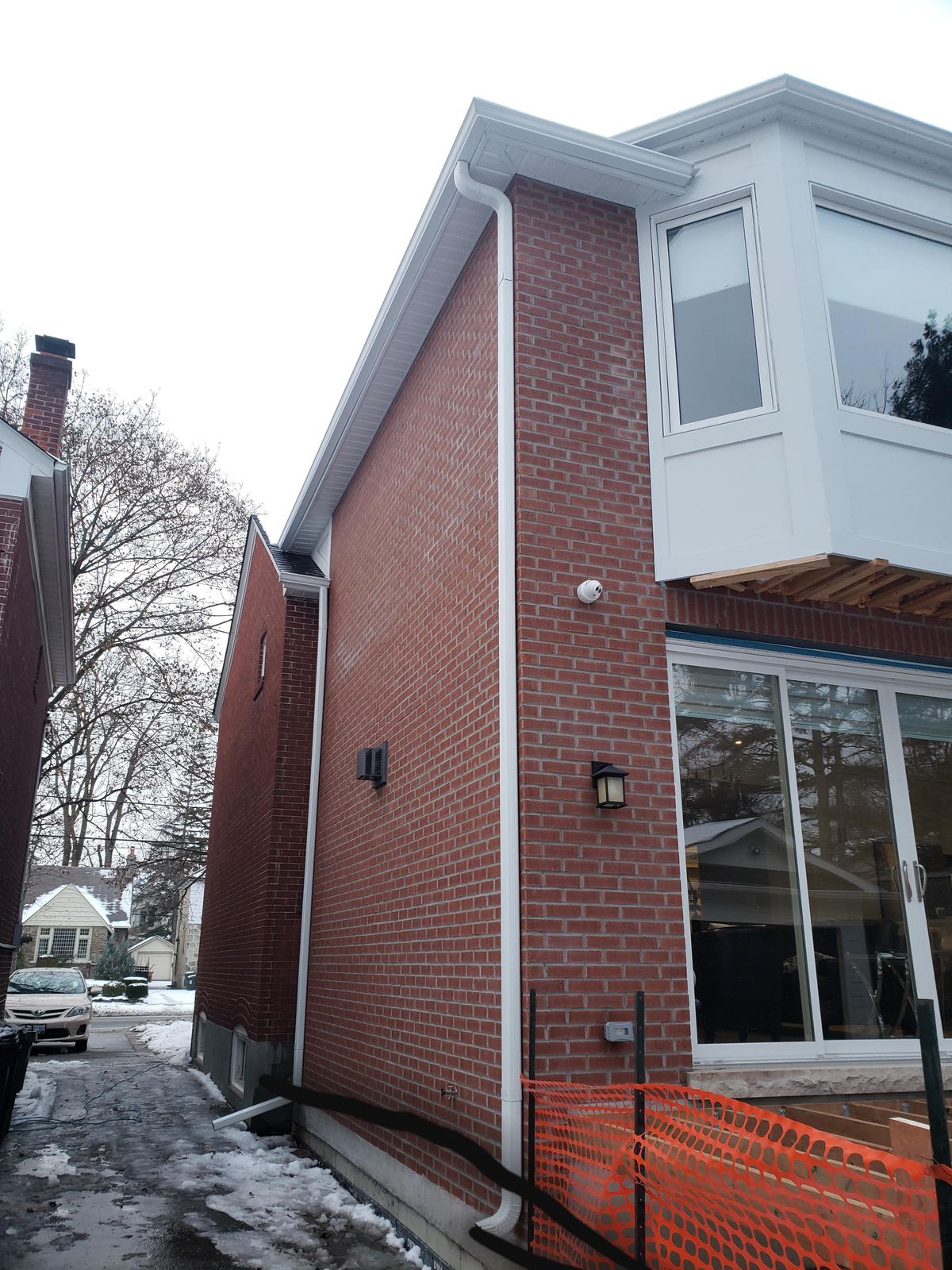
Rain Barrel Installation project 1
Rain Barrel Installation
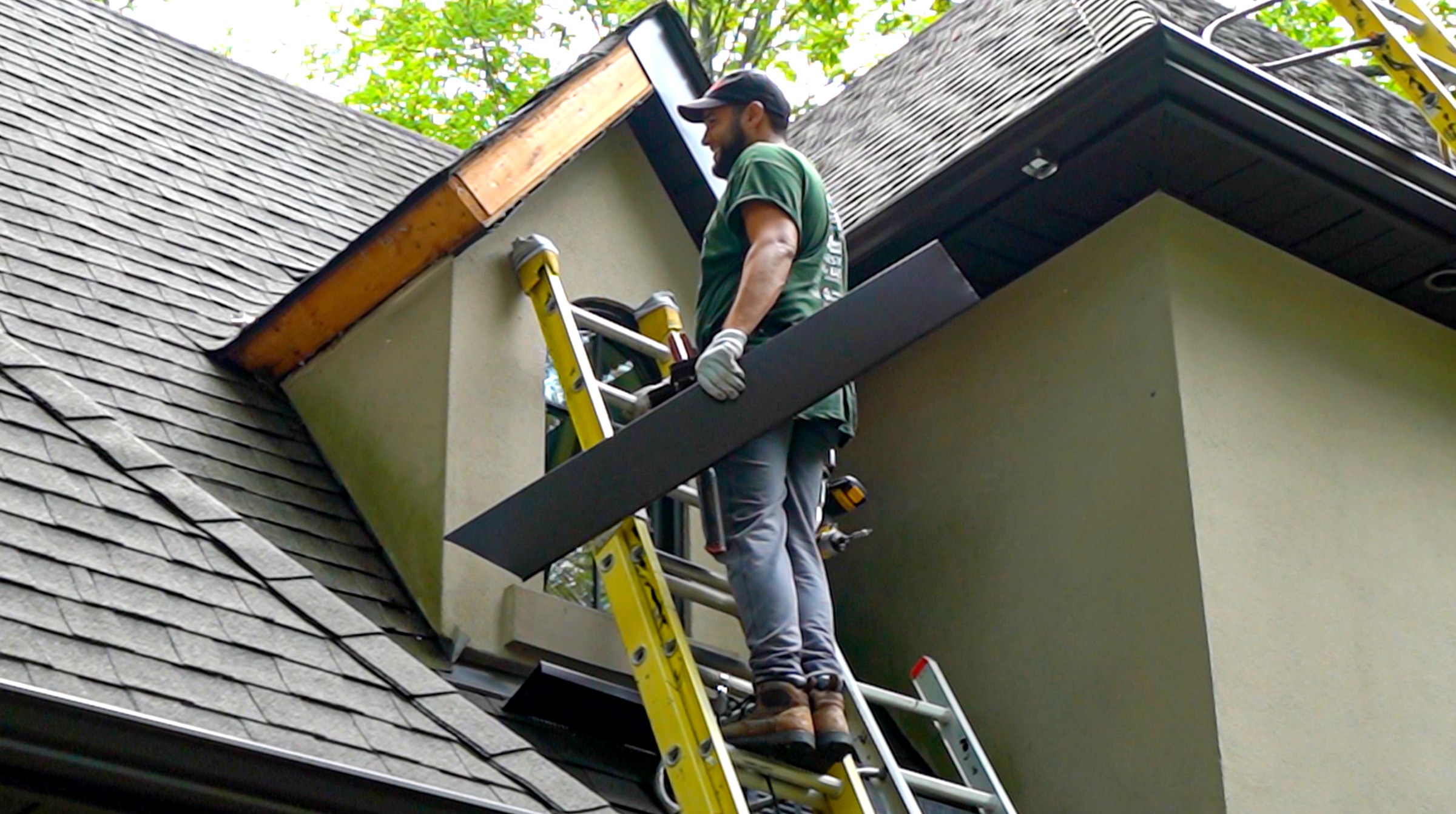
Rain Barrel Installation project 2
Rain Barrel Installation
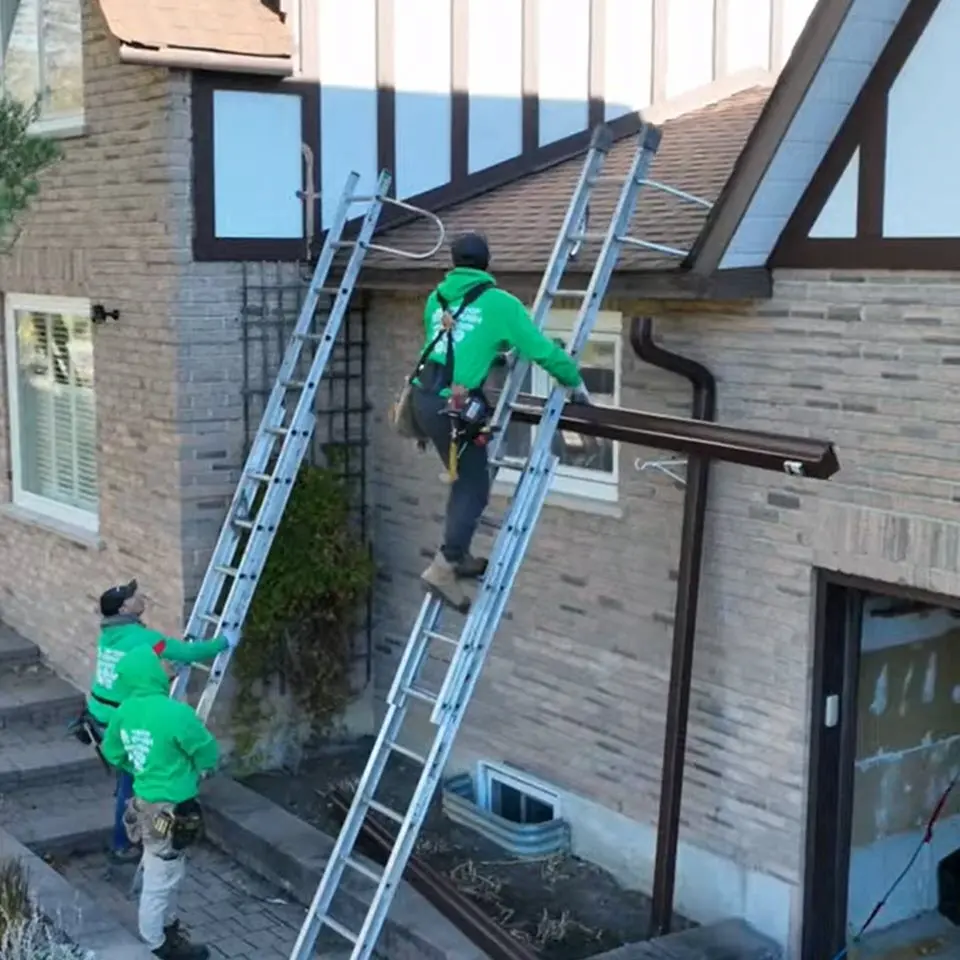
Rain Barrel Installation project 3
Rain Barrel Installation
Rain Barrel Installation project 4
Rain Barrel Installation
"My garden has never looked better and I'm saving on water bills. Win-win."
S

Susan H.

Mississauga • Rain Barrel Installation

Frequently Asked Questions

Common questions about rain barrel installation services.

QCan I use rain barrel water for vegetables?

Yes, with precautions. Avoid watering edible parts directly, and don't use water from barrels connected to roofs with certain shingles or treatments. We can advise based on your roof type.

QWhat happens in winter?

Rain barrels must be drained and disconnected before the first freeze. We can show you the winterization process, or include it in an annual maintenance visit.

QHow big a barrel do I need?

Standard barrels are 50–60 gallons. For larger gardens, we can install multiple barrels connected in series.

QWill a rain barrel affect my eavestrough drainage?

Not if installed properly. Our diverter kits allow normal drainage once the barrel is full, and during winter when the barrel is disconnected.

QWhen should I disconnect my rain barrel for winter?

Drain and disconnect it before the first hard freeze (typically late October or early November in the GTA), and reconnect or close the diverter so the downpipe drains normally through winter.

QCan I drink the water from a rain barrel?

Rain barrel water isn't intended for drinking. It's best used for watering gardens, lawns and planters, and for outdoor tasks like rinsing tools.

QWhat happens when my rain barrel is full?

With a proper installation, excess water is diverted back into the downpipe or routed through an overflow hose away from your foundation, so a full barrel doesn't create a water problem beside the house.

Ready to Get Started?

Contact us today for a free, no-obligation quote. We'll assess your needs and provide honest recommendations.